





Featured in






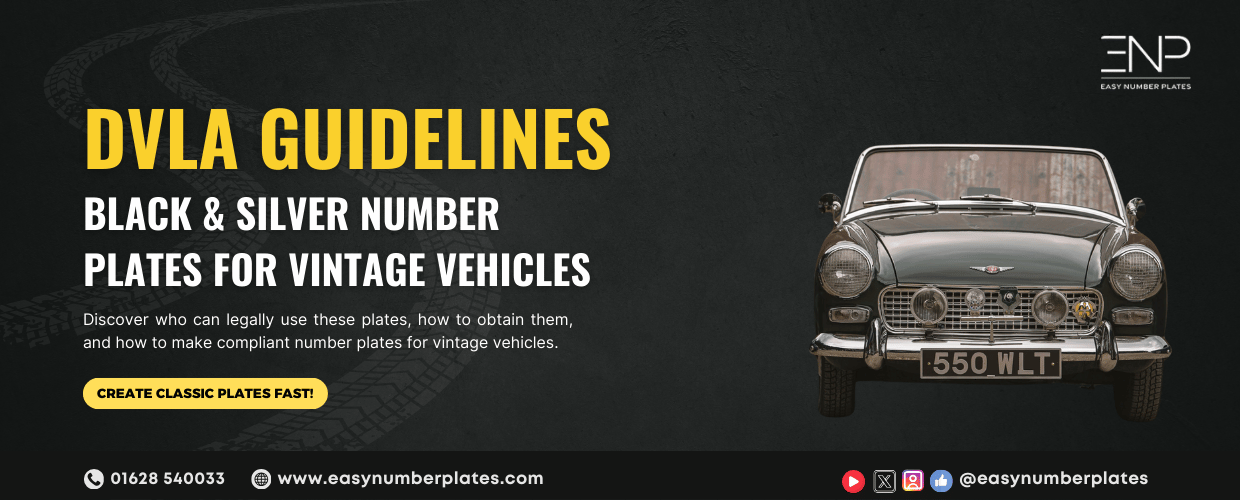
Driving a car or motorcycle on UK roads requires compliance with the regulations set by the Driver and Vehicle Licensing Agency (DVLA). Among these regulations, the use of number plates is strictly governed. In this article, we delve into the DVLA rules for black and silver number plates, their legal use, and common questions surrounding them.
Let’s explore!
Black and silver number plates are exclusively permitted for vehicles registered before 1st January 1973. These plates are typically associated with vintage and classic cars and motorcycles. For vehicles registered after this date, the use of black and silver plates is illegal. Instead, such vehicles must display yellow plates with black text (for the rear) and white plates with black text (for the front).
This distinction ensures that older, classic vehicles remain identifiable while maintaining clarity for modern cars. Additionally, some black and silver number plates have become collectibles, with certain rare ones valued at over £1 million.
No, modern vehicles (registered after 1st January 1973) are prohibited from using black and silver number plates. Displaying such plates on a modern car or motorcycle can result in fines and penalties. The DVLA enforces this rule to maintain order and ensure all vehicles are identifiable under current regulations.
If you’re unsure about the legality of your number plate, always refer to official DVLA guidelines or consult a DVLA-certified number plate supplier.
Classic vehicles are defined as those registered more than 40 years ago and that have not undergone substantial modifications. Owners of such cars can apply for historic vehicle status with the DVLA, allowing them to legally use black and silver number plates.
Keep in mind that even with historic vehicle status, the plates must adhere to DVLA standards, including:
Failure to meet these standards may result in fines or legal actions.
To get black and silver number plates for your qualifying vehicle, follow these steps:
You can easily make number plates online through our platform, where our car number plates maker ensures your plates are fully compliant with the latest regulations.
Yes, motorcycles registered before 1st January 1973 can also use black and silver plates, provided they meet the eligibility criteria. However, modern motorcycles are not allowed to display these plates, as the law applies equally to all vehicles.
Automatic Number Plate Recognition (ANPR) cameras may struggle to read black and silver plates effectively because they are not made with reflective materials. This limitation is one reason why modern number plates use reflective designs, improving visibility for law enforcement and traffic systems.
Understanding and adhering to the DVLA’s rules for black and silver number plates is essential for vintage vehicle enthusiasts in the UK. Not only does it ensure your vehicle remains legally compliant, but it also upholds the historic integrity of classic cars and bikes.
For further questions or to easily make number plates for your car or motorcycle, visit our car reg plates maker page. Start making number plates here to get your personalized plates today!


