





Featured in






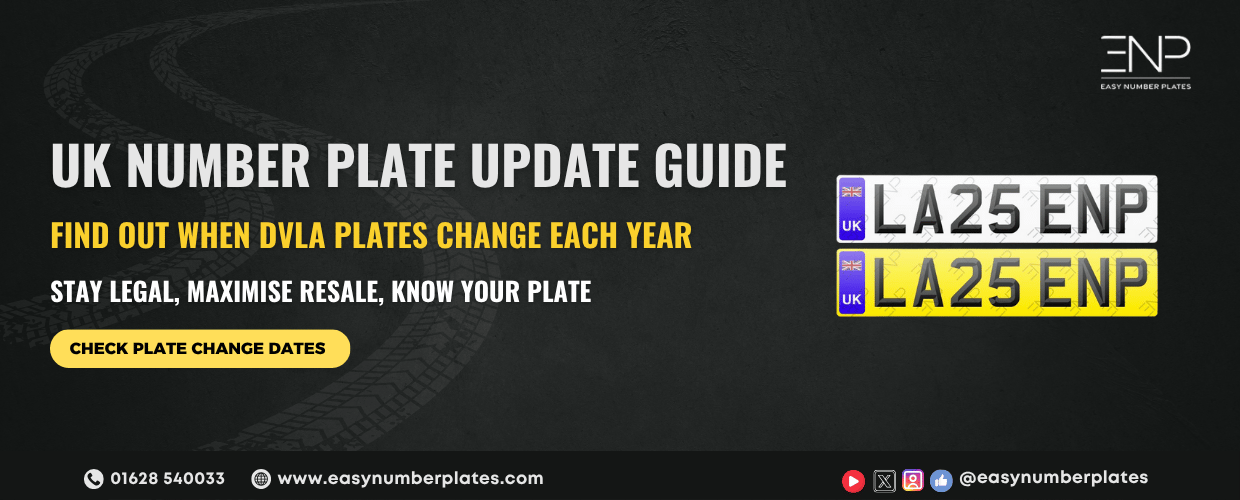
For any motorist or car enthusiast in the UK, understanding when and how number plates change can help you stay compliant, make informed decisions about your vehicle purchase, or even maintain the value of your car. The DVLA's number plate update system is one of those traditions that every driver should be familiar with—whether you're purchasing a new car, considering a personalized plate, or navigating a vehicle registration transfer.
Today's number plate system was introduced in September 2001, replacing earlier systems that used prefix or suffix letters to indicate a car's year of registration. From 1983 to August 2001, plates began with a letter (the "prefix") corresponding to the registration year, such as "A" for 1983–84 and "M" for 1994–95. Before that, the age identifier was at the end of the plate (the 'suffix'). Before 1963, various regional and chronological codes were used, making it more challenging to identify a vehicle's age or origin at a glance.
The current system is much simpler, making the year and region quickly recognizable to both motorists and law enforcement.
Modern UK number plates have a distinct format: AB25 XYZ
Example:
A plate such as "LA25 CVS" is a car registered in London ("LA") between March and August 2025 ("25”), with “CVS" being a random designation.
Here's a quick reference for memory tag examples:
...and many more. For a complete list, consult DVLA resources.
Each year, there are two official times when number plates change in the UK:
This biannual system provides a straightforward method for determining a car's age and has been in place since 2001. The changeover often sparks a surge in new car sales, as buyers seek the prestige and value associated with the latest registration.
Looking ahead, here are the plate identifiers you'll see:
| Year | March–August | September–February |
| 2024 | 24 | 74 |
| 2025 | 25 | 75 |
| 2026 | 26 | 76 |
| 2027 | 27 | 77 |
| 2028 | 28 | 78 |
| 2029 | 29 | 79 |
| 2030 | 30 | 80 |
These patterns will continue under current DVLA rules, making it easy to spot a vehicle's registration period for years to come.
The biannual update is all about clarity and fairness. Here's a quick look at the reasons behind the DVLA's change to the number plate system:
This approach streamlines everything from buying and selling to record-keeping and law enforcement.
Whether you're buying new, changing, or personalizing your number plates, UK law (via the DVLA) lays out strict rules for size, font, color, and spacing. Key points include:
Failing to comply can result in fines or the confiscation of your license plate. Approved suppliers must check identity and vehicle documentation before issuing road-legal plates.
Introduced in late 2020, green number plates identify zero-emission (electric/hydrogen) vehicles using a green flash on the left side.
Always buy from a DVLA-registered supplier to ensure your green plate is compliant and legal.
It is possible to change the number plates back to the original if you're selling a vehicle or removing a private plate. The DVLA's process allows you to reassign the original registration (as long as it is available), restoring the car to its initial status. Early application is recommended to avoid any hitches, particularly if you're coordinating a sale or transfer.
Staying informed about when number plates change cycles ensures your vehicle is always road-legal and attractive in the marketplace. With the correct information and resources, changing or checking your vehicle registration number is quick and hassle-free. For genuine plates, compliance tips, or guidance on your next registration update, use a trusted UK supplier or discover how to order number plates online with ease.
UK registration plates change every 1st March and 1st September.
Yes—there are DVLA-approved suppliers across the country offering local and online services. For a convenient option, consider using an online number plate builder.
There is an administrative fee payable to the DVLA, and you must also purchase the new plates from an approved manufacturer.
Yes. With every release, the DVLA reviews and bans plates that are considered offensive or misleading. It's illegal to alter plate spacing or use designs that misrepresent your vehicle's registration.
Yes. Northern Ireland uses a system that consists of three letters (area code) followed by one to four numbers. Plate changes do not align with those in the rest of the UK.