





Featured in






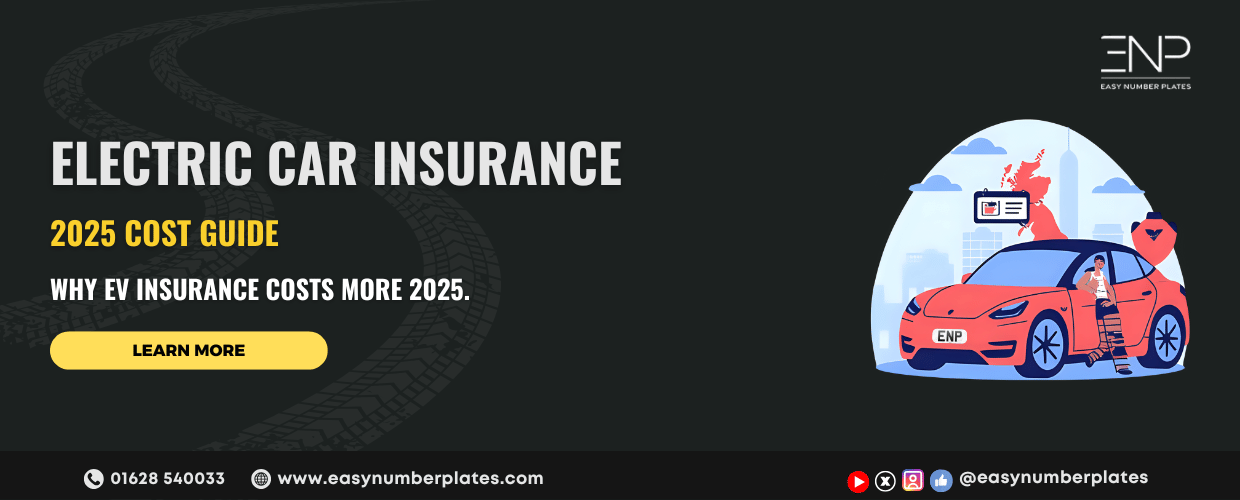
Electric vehicles (EVs) are the future of motoring in the UK — but 2025 has seen a sharp rise in EV insurance costs that's frustrating drivers. According to Compare the Market and MoneySuperMarket, the average EV insurance premium is now 30–40% higher than petrol or diesel equivalents.
So, why are insurers charging more for supposedly cleaner and simpler cars? Let's break down the real reasons behind the price spike, what's driving insurer caution, and how you can bring your premiums down.
(Tip: Before you renew your policy, make sure your number plates meet DVLA's 2025 standards — order compliant replacements via our Plate Builder.)
Recent reports indicate that EV insurance prices have outpaced those for traditional cars.
(Source: RAC, GoCompare, The Guardian Motoring Report 2025)
Even affordable EVs, such as the Nissan Leaf or MG4, now cost 25–35% more to insure compared to their petrol equivalents.
EV insurance is more expensive due to several cost and risk factors:
The battery is the most valuable and complex component of an EV, often accounting for up to 40% of the car’s value.
Any damage, even from a minor collision, can cost between £8,000 and £15,000 to replace.
Insurers often write off cars rather than repair them, increasing claim payouts.
Fewer UK garages are trained and certified to repair EVs.
This creates longer repair queues, higher labour rates, and more time in courtesy cars — all of which raise insurer costs.
EVs rely heavily on manufacturer-specific electronic components that are more difficult to source and replace.
Supply delays from overseas increase claim costs and repair times.
Modern EVs require specialist diagnostic tools and software updates, which add £100–£300 per service visit.
A single damaged sensor can mean recalibrating advanced driver-assist systems.
Most EVs cost more upfront than their petrol equivalents, meaning they have a higher insured value and, therefore, higher premiums.
There are plenty of misconceptions about why EV insurance is high. Let’s clear them up:
| Myth | Reality |
| "EVs are more likely to crash." | False — accident rates are similar to petrol cars. |
| "EV batteries catch fire easily.” | False — incidents are rare and statistically lower than ICE cars. |
| "All insurers overcharge for EVs." | False — specialist EV insurers offer lower rates. |
| "EVs are harder to repair." | True — but only because of the limited number of certified workshops. |
Even with higher premiums, there are ways to save:
The UK Government and insurers are working to stabilise EV insurance in 2025:
These changes are expected to lower costs gradually by 2026–2027.
Some electric models are proving more affordable than others due to reliability and low repair costs:
| Model | Typical Annual Insurance (2025) | Notes |
| Nissan Leaf | £980–£1,150 | Low battery replacement cost |
| Renault Zoe | £1,050–£1,200 | Compact size, easy parts sourcing |
| MG4 EV | £1,100–£1,250 | High safety ratings |
| Hyundai Kona Electric | £1,150–£1,300 | Strong repair network |
| Tesla Model 3 | £1,500–£1,700 | Higher value, complex electronics |
As EV technology becomes mainstream, insurers will adapt their models.
The rollout of AI-based damage assessment tools and modular battery replacement systems could cut claim costs by 2030.
By 2026, the UK insurance market is expected to introduce separate policies for:
Electric car insurance in 2025 remains expensive, primarily due to the high cost of batteries, limited repair expertise, and high parts pricing. However, competition, training, and innovation are driving change.
Quick Recap:
Keep your EV legal and stylish with Easy Number Plates — DVLA-compliant and customisable for every electric vehicle.
Yes, on average, 30–40% more due to higher repair and parts costs.
Yes, most policies typically include the battery, whether it is owned or leased.
Yes, driving data-based insurance (black box or app-based) can lower premiums.
Not all common models, such as the Nissan Leaf and MG4, have lower part costs and more trained garages.
Gradually. With more EVs on UK roads and better repair networks, premiums are expected to stabilise by 2026.