





Featured in






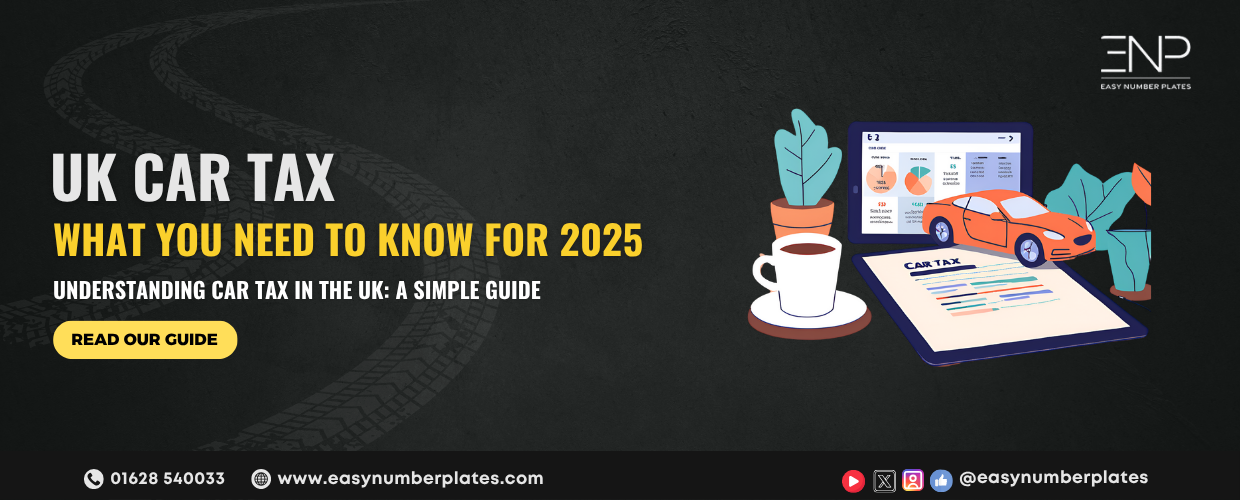
In the UK, it is legally required to pay vehicle taxes. Whether you drive a brand-new car or a used one, knowing how car tax is calculated helps you plan your expenses and stay within the law. In this blog, we’ll break down how much tax you might pay, what factors influence it, and what role your car number plate maker plays in keeping your vehicle road legal.
The charge imposed by the government for operating a motor vehicle on public roads is known as Vehicle Excise Duty (VED), which is also commonly called car tax. The amount varies based on several factors such as emissions, vehicle type, and price.
There’s no single rate for car tax. The amount depends on:
For cars that were first registered starting April 1, 2017, the taxation system consists of two components: an initial rate for the first year and a regular annual rate for subsequent years.
The first-year tax is determined by the vehicle's CO2 emissions.
Cars that have higher emissions incur a greater charge. In the following years, most vehicles are subject to a fixed annual tax, regardless of their emissions.
Here’s how it works:
These cars are taxed based on their CO2 emissions and fall into specific bands (A–M). For example:
The full list is available on the official GOV.UK tax bands page.
Currently exempt from VED, fully electric vehicles will start paying the regular rate in April 2025. A slightly lower rate is typically advantageous for mild hybrids and plug-in hybrids.
Cars that are over 40 years old may qualify for a tax exemption, but you must still register them each year. Additionally, if your vehicle is registered as off the road (SORN), you will not need to pay Vehicle Excise Duty (VED).
A common misconception is that private or personalised number plates change the amount of car tax you pay. In reality, your registration plate does not impact your vehicle’s tax. The car's specifications, not the license plate, determine the tax.
That said, if you switch to a private plate, you must ensure it’s legally made. For this, it's important to use a certified car number plate maker who provides DVLA-compliant plates that meet all UK road standards.
You can check your car tax status and pay it through the DVLA website. Payment options include:
Failure to pay your tax can result in fines, penalties, or having your vehicle clamped.
Car tax is something every vehicle owner must be aware of. Whether you're driving a brand-new hybrid or an older petrol car, the amount you pay depends on clear criteria set by the government.
If you're also looking to update or personalise your vehicle, don't forget to use a trusted car number plate maker like Easy Number Plates. We offer fast service, legal compliance, and top-quality designs to keep you on the road safely and stylishly.


